How to Start a Pressure Washing Business From Home
A pressure washing business is one of the simpler service businesses to run from a garage. You load up the equipment, drive to the job, and clean driveways, siding, decks, and fences. Doing it well and legally takes some planning.
Equipment and Realistic Startup Costs
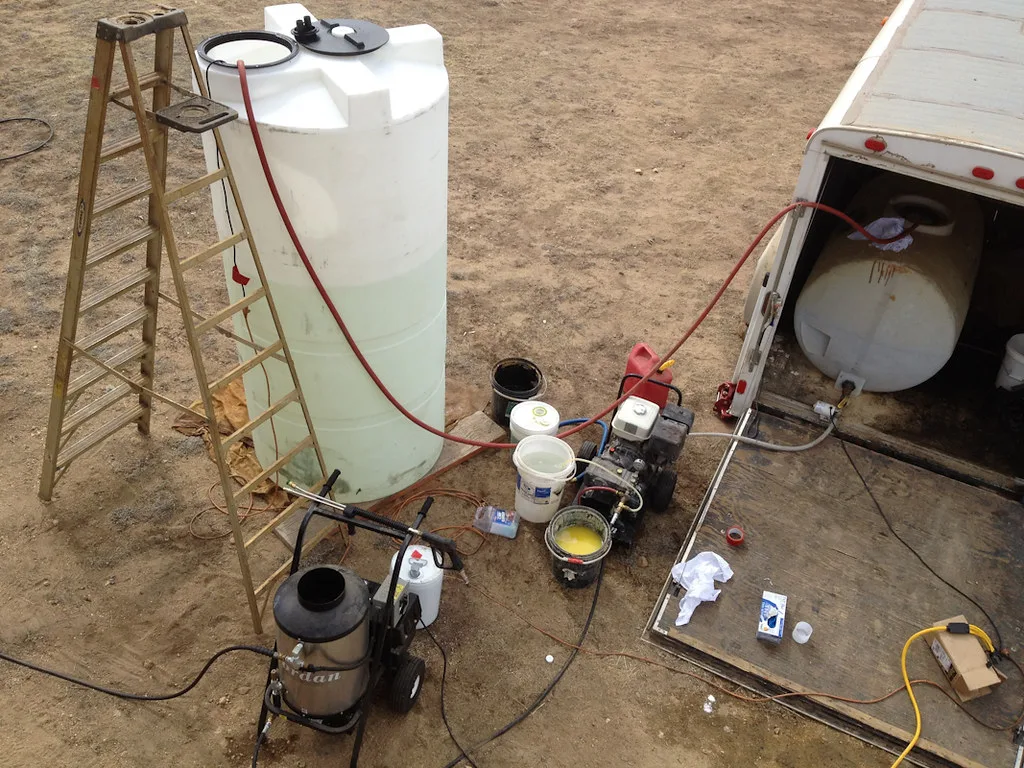
The machine is your main tool. Machines are rated by pressure (PSI) and water flow (GPM). Alkota says light residential jobs need roughly 1,500 to 2,000 PSI. Commercial work usually runs from 2,500 to over 4,000 PSI, and professionals often look for 3.5 to 5 or more GPM so they can clean large areas faster. Commercial units also have tougher pumps and frames, because they’re built to run all day.
ZenBusiness gave these estimates as of its February 2026 update:
- Residential-grade machines: about $1,000–$3,000
- Commercial machines: about $3,000–$15,000 or more
- Transportation: about $5,000 for a basic trailer, up to $30,000 or more for a customized van
- General liability insurance: roughly $40–$200 per month
Add-ons like a surface cleaner for flatwork are optional extras. Before you take your first job, work out how you’ll get water on each site and how you’ll haul everything.
Keep Wash Water Out of Storm Drains
Many new owners don’t know about this rule. Storm drains usually carry water straight to creeks and rivers without treating it. Ohio EPA explains that sending power washing wastewater into a storm sewer can violate the Clean Water Act.
San Luis Obispo County, California, gives practical advice. Block nearby drains, contain your runoff, and use the least toxic detergent you can. With approval, you can send detergent water to the sanitary sewer. Rules differ from place to place, so check with your city or local wastewater utility.
Licenses and Insurance
The SBA notes that license requirements and fees depend on where you are and what you do. Check with your state, county, and city, and ask about zoning for a home-based business. Have liability coverage in place before your first job.
Pricing Your Jobs
Some jobs are quoted per square foot and some at a flat rate. As of October 2026, Housecall Pro lists these typical ranges:
- Residential flatwork: $0.15–$0.75 per square foot
- Driveways: $100–$300
- House washes: $250–$800
- Decks: $150–$500; fences: $150–$400
- Minimum service fees: often $100–$250
Use these as a starting point, then adjust for your local market and your own costs.
First Customers and Seasonality
Start with neighbors, friends, and local community groups. Take before-and-after photos of every job so you can show your work. Business is usually busiest in the warmer months, so plan your budget and marketing for the slower season.
Safety First
The spray can push water under your skin. Mississippi State University warns that these injection injuries can look minor at first but can lead to infection or even amputation if treatment is delayed. Never point the wand at a person.
Stay off ladders when you can and use an extension wand, because kickback can throw you off balance. Wear eye protection, gloves, and work boots. Never run a gas unit in an enclosed space. On electric units, test the GFCI and keep cord connections out of water. Consumer Reports also warns against using zero-degree nozzles.
Start small, follow the rules, and grow one job at a time.
More on Garage Business Blueprint
- How to Start a Mobile Auto Detailing Business From Home
- Home Business Insurance: What Your Homeowner’s Policy Won’t Cover and What to Buy Instead
- Can You Legally Run a Business From Your Garage? Zoning, Permits and HOA Rules Explained
Sources
- Alkota: Pressure Washer Basics & Buying FAQs
- ZenBusiness: Pressure Washing Startup Costs
- Ohio EPA: Wastewater Rules for Mobile Power Washing (fact sheet)
- San Luis Obispo County: Stormwater Power Washing Brochure
- U.S. Small Business Administration: Apply for Licenses and Permits
- Housecall Pro: How to Price Pressure Washing Jobs
- Mississippi State University: Pressure Washer Safety (safety newsletter)
- Consumer Reports: Consumer Reports Zeros In on Pressure Washer Safety