How to Start a Bike Repair Business From Your Garage
Bike repair is a natural fit for a garage business. The work is hands-on, the tools fit on a pegboard and the bikes come to you. You can also take the shop on the road as a mobile service and fix bikes in customers’ driveways.
Here’s how to get started without overspending, and how to stay safe when e-bikes start rolling in.
Build Your Skills First
Customers trust you with brakes and steering, so your skills have to be solid before you charge anyone. Many mechanics start by practicing on their own bikes and on cheap used ones before taking paid work.
Formal training helps too. The United Bicycle Institute in Ashland, Oregon, lists a five-day Introduction to Bicycle Maintenance course and a 10-day Professional Repair and Shop Operation course in its 2025 brochure. Students who pass the written exam in the professional course earn UBI’s Certified Bicycle Technician certificate. The brochure doesn’t list prices, so call the school for current tuition.
Essential Tools and a Repair Stand
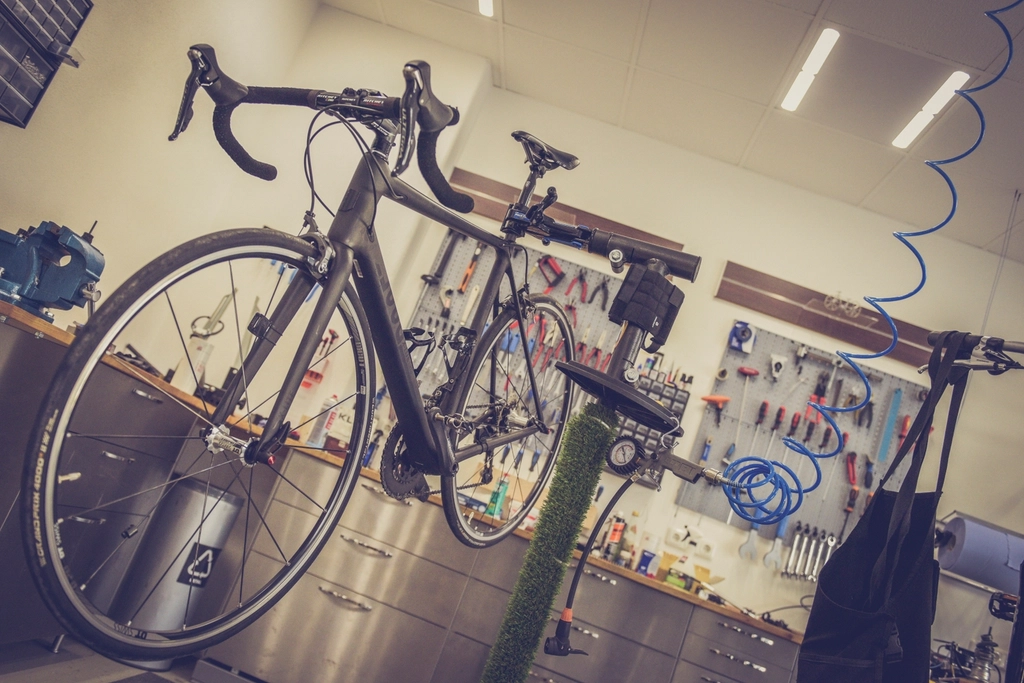
A solid repair stand is the one tool you shouldn’t skip. It holds the bike at working height, which saves your back and makes adjustments faster.
- Repair stand: As of October 2026, Performance Bicycle lists the Park Tool PCS-10.3 Deluxe Home Mechanic Repair Stand at $279.95, with an 80-pound maximum capacity when the bike is centered. That limit matters if you plan to work on heavy e-bikes.
- Tool kit: Park Tool lists its AK-5 Advanced Mechanic Tool Kit at $428.95. It includes cone wrenches, spoke wrenches, a chain tool, a cable and housing cutter, a cassette lockring tool and a copy of the Big Blue Book of Bicycle Repair.
- Extras to add over time: a torque wrench, a truing stand, a floor pump with a gauge, brake bleed kits for common systems, and cleaning supplies.
Together, a stand and a starter kit at those listed prices run roughly $700 before shop supplies. Buying tools one at a time as jobs require them can spread the cost out.
Set Up Your Space
You don’t need much room. A clear area around the stand, a sturdy workbench, a pegboard for tools and labeled bins for small parts will handle most jobs.
Plan where customer bikes will wait. Wall hooks or a floor rack keep them off the ground and organized by job. Store solvents and degreasers in closed containers, ventilate the garage when you use them and wear gloves and eye protection.
For a mobile setup, a van or trailer with a folding stand, a portable tool chest and a small parts inventory lets you handle tune-ups and flats on site.
Source Parts Smartly
Keep a small stock of fast-moving items: tubes in common sizes, brake pads, cables, housing, chains and chain lube. Order less common parts per job after you’ve quoted the customer.
Bicycle parts distributors often require a business license or resale certificate before opening a wholesale account, so have your paperwork in order. Until then, buying from retail suppliers and charging a reasonable markup is a simple way to begin.
Price Your Work
Look at published service menus near you to see what customers expect to pay. Two real examples, both labor only with parts extra:
- Utah Mountain Biking in Lehi, Utah, lists a $75 tune-up, a $40 bike check, an $8 tube or tire install for most non-e-bikes and $70 per hour for repairs not on its menu. It notes that e-bike rates may differ.
- The UNLV Campus Recreation bike shop lists general-public prices of $69 for a basic tune-up, $113 for a more thorough tune-up and $13 for a tube replacement.
Your local market may be higher or lower. Mobile mechanics often add a trip fee to cover drive time and fuel. Price e-bike work separately, since it usually takes longer and carries more risk.
Be Careful With E-Bikes
E-bikes are a growing share of repair work, but their lithium-ion batteries can be a fire hazard. The U.S. Consumer Product Safety Commission says it has seen many lithium-ion battery home fires and deaths at night while batteries were charging.
Before you accept an e-bike, consider these precautions based on CPSC guidance:
- Never charge a customer’s battery while you’re asleep or away, and unplug it when charging is done.
- Use only the manufacturer’s charger or one it recommends. CPSC advises against “universal” chargers.
- Inspect for damage at intake. Decline batteries that look swollen, cracked or modified, and don’t rebuild or rework battery packs.
- Never toss lithium batteries in the trash. Send them to a battery recycler or hazardous waste site.
Keep a fire extinguisher handy and store e-bikes away from exits and flammable materials. Some mechanics choose to service only e-bikes from established brands, or to skip electrical work entirely.
Insurance and Home-Occupation Rules
A homeowner’s policy may not cover business equipment, customer property or injuries tied to your work. Talk to an insurance agent about general liability and coverage for customer bikes in your care.
Customer drop-offs and signs can also trigger home-occupation rules. Zoning, permits and HOA rules vary by state, county and city, so check with your local planning office before you open.
Find Your First Customers and Run a Clean Workflow
Start with neighbors, friends and local community groups. Commuters, families with kids’ bikes and riders near popular trails are all good prospects. A simple website and a business listing on online maps help people nearby find you.
A consistent workflow builds trust from day one:
- Tag every bike at intake with the owner’s name, phone number and requested work.
- Inspect the bike with the customer and note existing damage.
- Give a written quote before you start, and call for approval if you find more work.
- Test-ride or test-function every repair before pickup.
Start small, do careful work and let word of mouth grow your business.
More on Garage Business Blueprint
- Can You Legally Run a Business From Your Garage? Zoning, Permits and HOA Rules Explained
- Home Business Insurance: What Your Homeowner’s Policy Won’t Cover and What to Buy Instead
- How to Start a Small Engine Repair Business From Home
Sources
- U.S. Consumer Product Safety Commission: Micromobility Information Center
- United Bicycle Institute: 2025 Course Brochure
- Park Tool: AK-5 Advanced Mechanic Tool Kit
- Performance Bicycle: Park Tool PCS-10.3 Deluxe Home Mechanic Repair Stand
- UNLV Campus Recreation: The Bike Shop
- Utah Mountain Biking: Service Rates