Selling Firewood From Home: Cords, Labels and Local Rules
Firewood is one of the simplest products a garage-and-yard business can sell. Buyers show up every fall, and you can start with a few cords. The catch is that firewood has more rules than most people expect, from how you measure it to how far you can move it.
This is general information. Firewood rules vary by state, county and city, so check with your state’s weights and measures office and agriculture department before you sell.
Who buys firewood
Homeowners with fireplaces, wood stoves or fire pits, plus campers and neighbors who want a few bundles for backyard fires. Bundles sell easily from a driveway stand; full and half cords usually mean delivery by truck or trailer.
Sell by the cord, not the “truckload”
Many states follow the method-of-sale rules in NIST Handbook 130. Connecticut, for example, defines a cord as 128 cubic feet of wood stacked neatly in tight, parallel rows. It requires fireplace and stove wood to be sold by the cord or a fraction of a cord, and it bans terms such as “face cord,” “rack,” “pile” and “truckload” in ads and sales.
Connecticut also requires a delivery ticket or invoice for unpackaged wood that lists the seller and buyer, the delivery date, the quantity, the price and a description of the wood. Small packaged bundles have their own labeling rule: under one-eighth of a cord, the quantity goes on the label in cubic feet or another approved unit.
Don’t move firewood far
Firewood can carry invasive insects and diseases. The Don’t Move Firewood campaign suggests buying wood cut within 50 miles of where it will be burned, and certified heat-treated wood for longer trips.
Some states put this into law. In New York, untreated firewood can’t come in from other states, and wood grown in the state can’t travel more than 50 miles from its source unless it has been heat-treated to the state standard. Sellers of untreated wood must give buyers a label or receipt showing where it came from. If you live near a state line or sell to campers, check your state’s rules first.
Sell seasoned wood
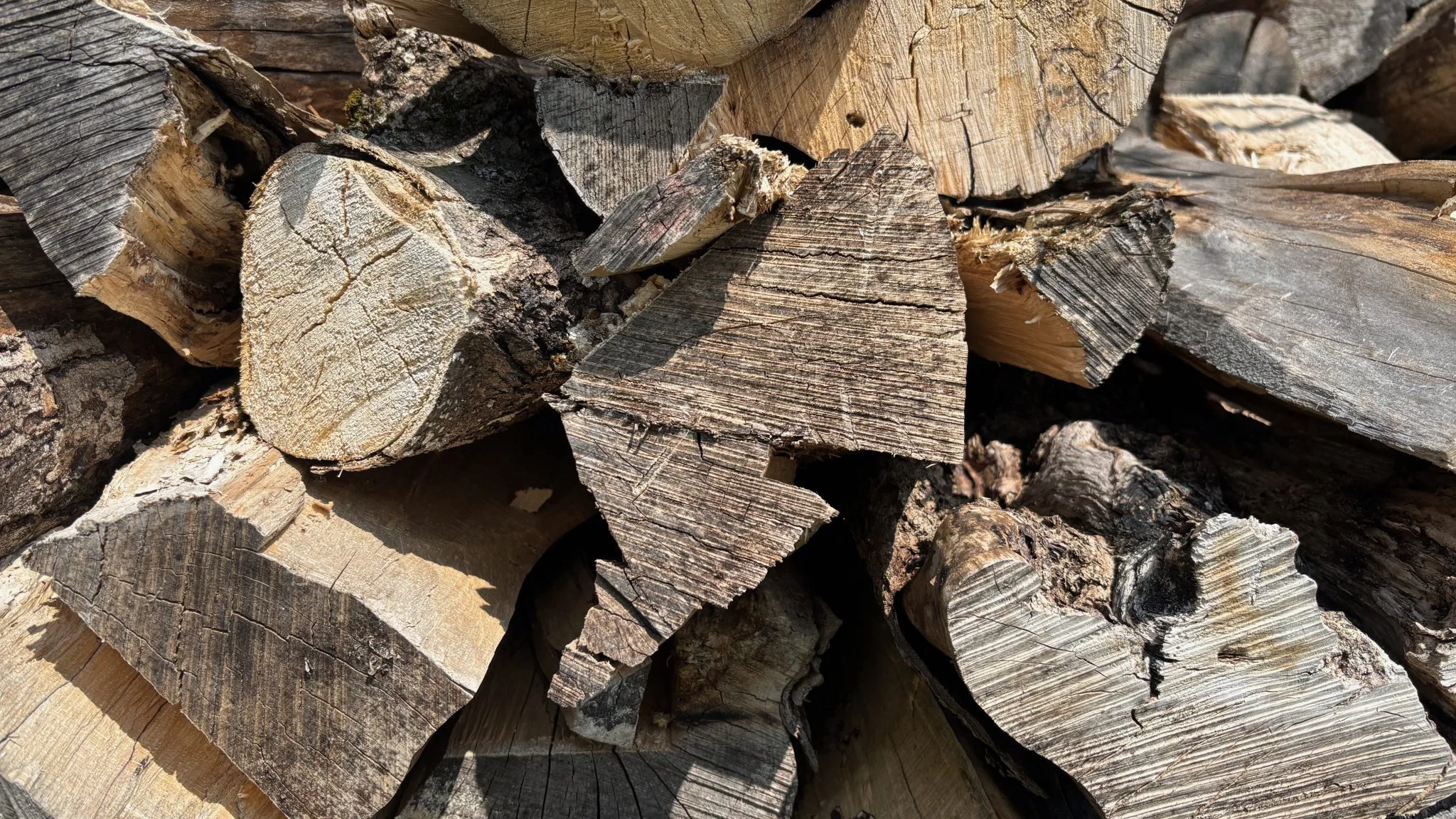
Buyers want wood that lights and burns well. A University of Maryland Extension fact sheet recommends firewood at about 20% moisture or less, and says wood above 30% isn’t seasoned. It notes that seasoning often takes 6 to 12 months and that oak and hickory can take longer. A digital moisture meter costs about $30; test the middle of a freshly split piece, not the ends.
- Split wood and cut it to length so it dries faster.
- Stack it off the ground with the top covered and the sides open to air.
- Pick a sunny spot, and keep stacks away from the house.
Safety first
Chainsaws and splitters cause serious injuries. OSHA’s chainsaw fact sheet calls for head, eye, hearing, foot and leg protection (such as chaps) plus gloves. It also advises starting the saw with the chain brake on, staying out of the kickback zone and never working alone. Use a cart for heavy loads.
Pricing and where to sell
Prices vary widely by region and wood type, so compare what local sellers charge for the same measured amount, then make sure your price covers wood, fuel, equipment, time and delivery. Sell bundles from a roadside stand, a farm market table or local listings.
More on Garage Business Blueprint
- Do You Need a Business License to Sell From Your Garage?
- Sales Tax Basics for a Garage Business
- Building and Selling Raised Garden Beds: A Garage Business Idea
Sources
- Connecticut Department of Consumer Protection: Firewood and Stove Wood Regulations
- Texas Department of Agriculture: Weights and Measures – Firewood
- Don’t Move Firewood: How to Help
- New York State DEC: Protect Our Trees by Using Local Firewood
- University of Maryland Extension: Measuring Wood Moisture (FS-1074)
- OSHA: Chainsaw Safety Fact Sheet