Bounce House Rentals From Home: What to Know Before You Buy One
Bounce houses are one of the most requested party rentals, and they fit neatly on a garage shelf when deflated. But an inflatable carries more risk than a stack of folding chairs, so it pays to understand the safety rules, costs and paperwork before you buy your first unit.
Safety Comes First
Injuries are not rare. Reporting by Stateline cited a Consumer Product Safety Commission (CPSC) analysis of hospital records estimating that inflatable injuries rose from 5,311 in 2003 to 17,377 in 2013.
The CPSC’s safety bulletin on inflatable amusement devices (updated August 2015) is a practical checklist for operators. Key points:
- Wind: Follow the manufacturer’s wind limit, which the bulletin says typically falls between 15 and 25 mph for commercial units. If winds or gusts top 25 mph, unload and deflate immediately.
- Anchoring: Use every anchor point the manufacturer specifies. The bulletin describes stakes of 18 to 42 inches driven vertically with at least 75% in the ground, and warns never to tie down to a vehicle.
- Supervision: At least one attendant with a clear line of sight for a small bounce house, and more for large slides or units for young children.
- Occupants: Never exceed the manufacturer’s rider and weight limits, and keep jumpers of similar size together.
When shopping, ask sellers whether a unit is built to ASTM F2374, the industry standard for inflatable amusement devices that the CPSC bulletin references.
Check Your State’s Rules
According to Stateline, only about half of states regulate inflatables through permits, inspections or insurance requirements, and the agency in charge varies, from a department of labor to a department of agriculture or insurance. Rules vary by state, so contact your state’s amusement ride safety office before your first booking.
Commercial Grade vs. Residential
Manufacturer Magic Jump says backyard residential units use uncoated fabric and last about six months to a year, while commercial units use 16- to 18-ounce PVC-coated vinyl and last about three to five years. It marks residential units as unsuitable for rental companies.
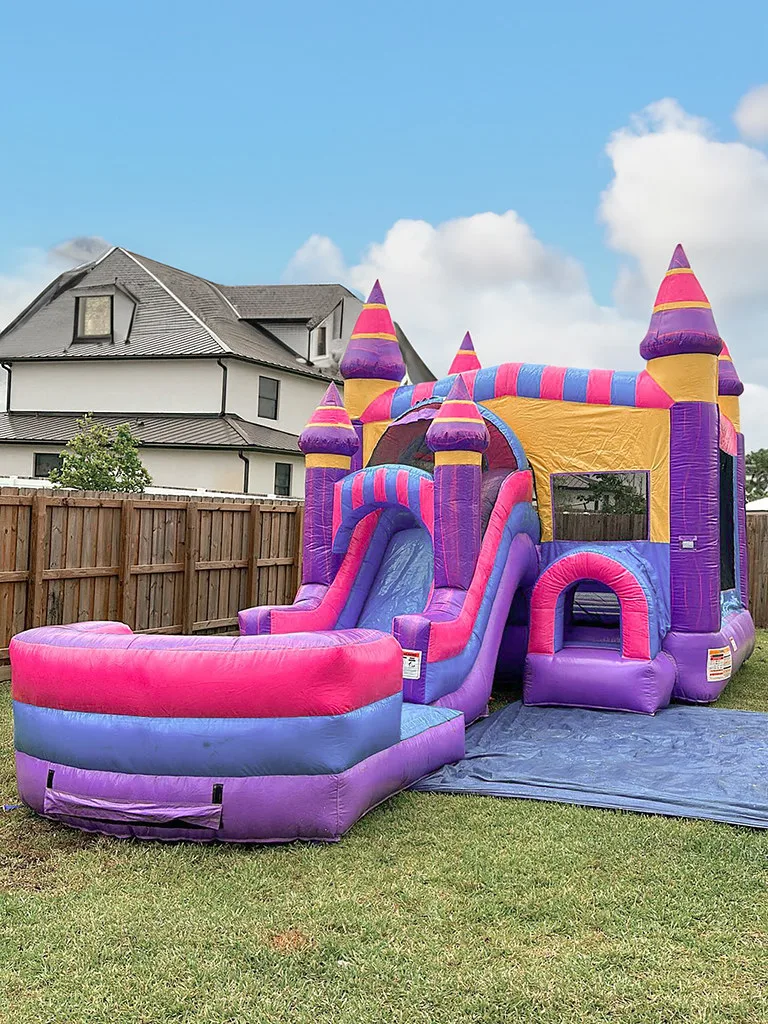
As of October 2026, 13-by-13-foot class commercial units with blowers were listed on Walmart.com at about $1,500 (JumpOrange) to $1,900 (TentandTable, on sale). Prices change often, so compare several sellers.
Insurance, Agreements and Waivers
Ask your insurance agent to confirm in writing that your general liability policy covers inflatables; don’t assume a standard business policy includes them. Stateline reported operators paying $1,500 or more per year, but your quote will depend on your state, insurer and coverage. Have a local attorney review your rental agreement and waiver, since enforceability differs by state.
Cleaning, Storage and Transport
Magic Jump recommends cleaning after every use with mild soap and warm water, then letting the unit dry completely before packing it, because trapped moisture leads to mold and mildew. Store it in a dry, ventilated spot out of direct sunlight.
Commercial vinyl units are heavy and bulky when rolled. Lift with your legs, use a hand truck or dolly, and bring a helper for loading and unloading.
More on Garage Business Blueprint
- How to Start a Party Rental Business From Your Garage
- Home Business Insurance: What Your Homeowner’s Policy Won’t Cover and What to Buy Instead
Sources
- U.S. CPSC (via Tennessee.gov): Amusement Ride Safety Bulletin: Inflatable Amusement Devices
- Stateline: Bounce House Regulations, Enforcement Lacking as Injuries Soar
- Magic Jump: Buying Advice: Residential vs. Commercial Inflatables
- Magic Jump: Keep Your Magic Jump Bounce House in Top Shape with These Simple Cleaning Tips
- Walmart.com: JumpOrange Fiesta Commercial Grade Bounce House with Blower
- Walmart.com: TentandTable Commercial Inflatable Bounce House – Rainbow