
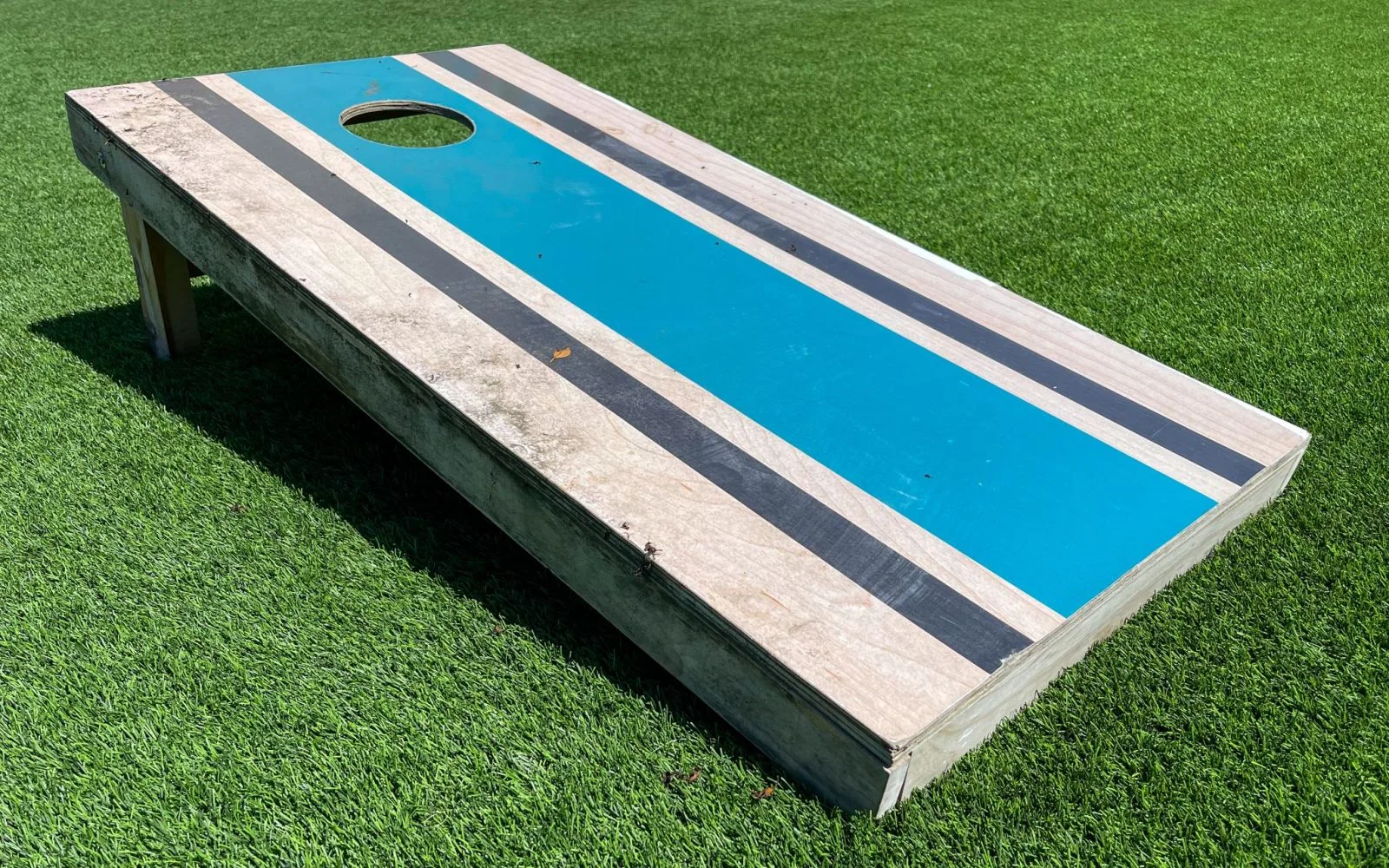
Building and Selling Cornhole Boards From Your Garage
Cornhole is a simple product: two wooden boards and eight bags. It is also a good fit for a garage woodshop, because the boards are flat, repeatable and easy to customize with team colors, wedding names, or family monograms. Here is what to know before you build your first set to sell.
Who Buys Cornhole Sets
Buyers tend to cluster around a few occasions: tailgating, backyard cookouts, weddings, bars and breweries, schools and clubs, and gifts. Each group wants something a little different. A tailgater wants a sturdy, good-looking set that fits in a truck bed. A wedding couple wants custom artwork. A bar wants boards that survive a lot of use. Picking one or two of these groups helps you decide what to build and where to advertise.
Know the Standard Sizes
Most people expect regulation-size boards, so building to the common spec is the safest starting point. According to one widely used set of tournament guidelines, each board is about 24 inches by 48 inches, with a 6-inch hole centered 9 inches from the top edge and 12 inches from each side. The front edge of the playing surface sits 3 to 4 inches off the ground and the back edge about 12 inches. Boards are set 27 feet apart, and each bag is roughly 6 inches square and weighs 15 to 16 ounces.
Those numbers come from one organizer’s guidelines, and different leagues vary a little, so check the rules of any league or event your customers play in. Many sellers also offer a smaller “tailgate” size for easier transport.
Materials and Construction
A common build uses a 2×4 frame, a plywood top, and fold-down legs. Better sets often use a thicker, smoother top because a thin top can feel bouncy. Finish matters as well: a heavy clear coat can make the surface sticky or slippery depending on humidity, so test your finish on scrap boards and play a few rounds before you sell anything.
- Budget builds: construction lumber and standard plywood keep costs down but may need more sanding and sealing.
- Mid-range builds: select lumber and sanded plywood give a cleaner look.
- Premium builds: hardwood frames and birch plywood tops, often with custom graphics.
Custom Graphics Are the Upgrade
Plain boards compete on price. Custom boards compete on design, and design is where a small shop can stand out. Vinyl cut on a plotter, stencils, or sublimation transfers all work. If you already own a vinyl cutter or laser, cornhole is an easy add-on product. Keep a catalog of a few ready-to-order designs plus a custom option, so every order does not become a new design project.
Pricing and Shipping
Work out your cost per set first: lumber, plywood, hardware, finish, bags, and your time. Then check what comparable handmade sets are listed for on Etsy, Facebook Marketplace and local shops right now, since prices shift with lumber costs. Our guide on pricing handmade products walks through a simple formula.
Shipping is the catch. A pair of boards is large and heavy, and freight can eat a big part of the price. Many garage sellers focus on local pickup and delivery, plus a few events, and treat shipping as a special order.
Safety and Compliance Notes
Wear eye and hearing protection and use dust collection when cutting and sanding. Finishes and stains have ventilation and storage rules, so keep rags and fuels handled safely; see our post on fire safety in a garage workshop. Cornhole sets are generally sold to teens and adults, but if you market to young children, look into the Consumer Product Safety Commission’s rules for children’s products. Also note that using team or school logos without permission can raise trademark problems, so stick with your own artwork or licensed designs. Rules for selling from home vary by state, county and city, so check locally.
Where to Sell
Start local: Facebook Marketplace, neighborhood groups, breweries, and booths at craft fairs and tailgate events. Add an Etsy listing for customizable sets once you have good photos. Photos of boards in use on a lawn, with a close-up of the finish, tend to help.
Getting Started
- Build one set to the standard spec and play on it for a week.
- Write down your material and time costs.
- Create three design options and one custom option.
- Photograph the set and list it locally first.
- Collect feedback, then refine before building in batches.
More on Garage Business Blueprint
- Tabletop Game Accessories: A Niche Garage Business for Gamers
- How to Start a Vinyl Decal and Sign Business From Home
- Building and Selling Raised Garden Beds: A Garage Business Idea