Making and Selling Cutting Boards From Your Garage
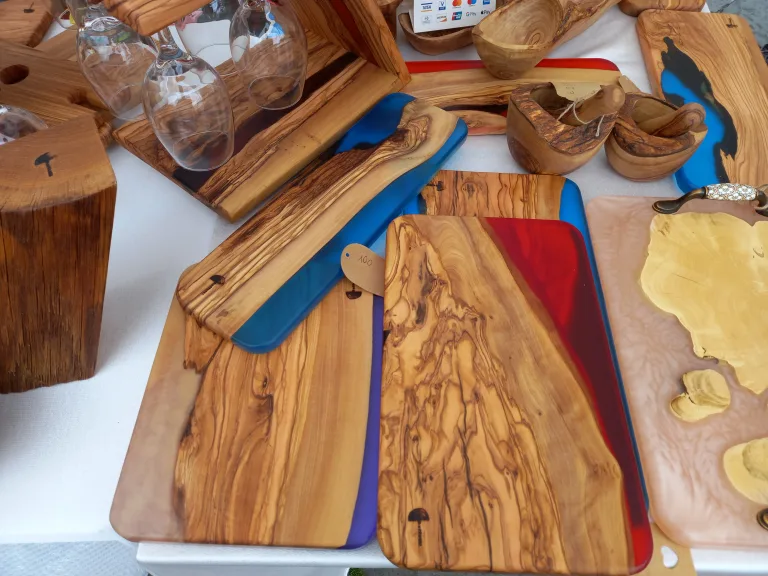
Cutting boards are a popular first product for garage woodworkers. They’re useful, they make good gifts, and you can make one without a huge shop. Here’s what it takes to make and sell them well.
What It Involves
You’ll be milling hardwood flat and square, gluing strips into a panel, then flattening, sanding, shaping, and oiling it. End-grain boards add a second glue-up, so they take more time and more material.
Equipment and Realistic Costs
In a 2020 Fine Woodworking exercise on equipping a shop for about $1,000, the hosts priced a new planer at $450, a used one at $200, a used table saw at $300, a random orbit sander at about $60, and a basic set of clamps at $122. Their all-new tool list came to $2,733. A Zenind startup guide says a small home-based woodworking business may start with “a few thousand dollars,” and it suggests keeping 5% to 10% in reserve. Prices have changed since then, so price tools locally, and look at used ones.
Choosing Wood: Grain Matters
- Hard maple (about 1,450 on the Janka hardness scale) is tough and tight-grained.
- Walnut (about 1,010) and cherry (about 995) are softer and easy on knives. Cherry darkens with light exposure.
- Sawinery suggests avoiding open-grain oak, which can trap food particles and moisture.
On end-grain boards the wood fibers face up, which is gentler on knives and lets cut marks close up, but the boards cost more to make. Edge-grain boards are lighter, cheaper, and more stable, but they show grooves sooner.
Food-Safe Finishes
Use food-safe mineral oil, often topped with a beeswax blend or board cream. Skip cooking oils like olive oil, which can go rancid. Include care instructions with every board you sell.
Take Wood Dust Seriously
IARC classifies wood dust as “carcinogenic to humans,” mainly because it causes cancers of the nasal cavity and sinuses. OSHA says breathing wood dust can also cause allergic and other respiratory symptoms. OSHA’s preferred control is to collect dust at the tool where it’s made, with respirators as an added layer of protection. For a garage shop, that means hooking a dust collector or shop vac to your sander and saws and wearing a properly fitted respirator.
Pricing and Where to Sell
As of October 2026, retailer Misen says edge-grain boards typically start around $50 to $70 and rarely go above $200, while end-grain boards start near $100 and run $300 to $500 for larger sizes. RankHero’s Etsy data for “cutting board” (updated May 2026) showed a median price of $42.99. Price from your real material and time costs, not just from what competitors charge.
You can sell at craft fairs and farmers markets, by word of mouth, or on Etsy. Etsy charges $0.20 per listing plus a 6.5% transaction fee, and payment processing fees come on top of that.
Common Mistakes
- Using open-grain woods or finishes that aren’t food-safe.
- Leaving labor out of your prices.
- Sanding without dust collection or a respirator.
- Skipping the paperwork. Rules on business licenses, sales tax permits, and home-business zoning vary by state and city, so check with your local offices.
More on Garage Business Blueprint
- Starting a Furniture Flipping Business From Your Garage
- Getting Your Garage Business Ready for Holiday Craft Fairs
- Can You Legally Run a Business From Your Garage? Zoning, Permits and HOA Rules Explained
Sources
- OSHA: Wood Dust
- OSHA: Wood Dust – Possible Solutions
- IARC Monographs Vol. 62 (via INCHEM): Wood Dust
- Sawinery: Best Wood for Cutting Boards
- Misen: Maple, Walnut, or Cherry? Picking the Right Board Wood
- Fine Woodworking: STL229 – The $1000 Shop Exercise
- Zenind: Woodworking Business Startup Costs – A Practical Budget Guide
- RankHero: Cutting Board Keyword Overview
- Etsy: Fees & Payments Policy